All his life, Iranian Mohammad Ashkiyoun has sold Persian carpets. And now? Caught between sanctions, war, and blocked supply routes, he is struggling to keep both his family and his business together.
By Sebastian Astner and Anna Lea Jakobs, Düsseldorf
Yesterday, Mohammad Ashkiyoun had already sent an SMS to his brother. Now his phone vibrates; he briefly looks up from the carpet designs on his computer. Maybe his brother managed to find an internet connection in Iran today. But no—it’s not his brother calling. As is almost always the case these days.
Here in Germany, Ashkiyoun is safe, and so are the carpets. But more than 3,400 kilometers away, in Iran’s capital Tehran, his family is not. His two brothers are there, along with the family business. They produce Persian carpets, which Ashkiyoun sells here in Germany through a subsidiary.
On the edge of Düsseldorf’s wealthy district Oberkassel, past a gas station and Küppers Bierstuben, in a small backyard, lies Ashkiyoun’s shop. In the past, they had a large showroom right in the middle of Oberkassel; today, it’s a back room inside a real estate office. Things have been better before. Ashkiyoun sits down in an armchair, on which a mini carpet lies as a seat warmer. Around him, carpets are stacked, and two hang on the walls behind and in front of him. Suddenly, it starts snowing—thick, hail-like snow—and it’s the end of March. “Surprising,” says Ashkiyoun. But what isn’t surprising anymore these days?
Carpets are among Iran’s most important export goods
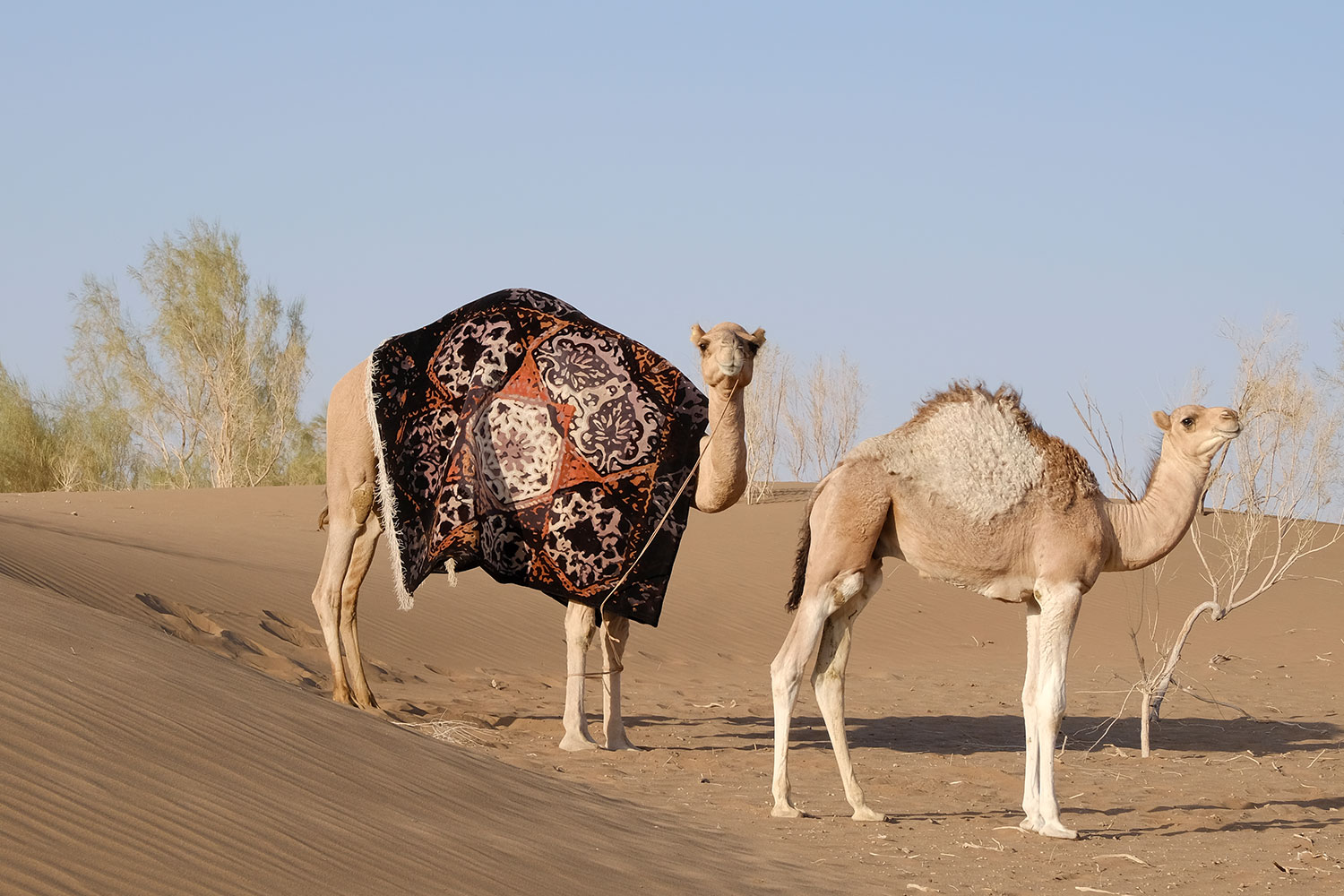
Since his country was attacked by the United States, many people have been talking about the logistics hub in the Middle East through which numerous goods reach the West. Gas, crude oil, refined products—these are what the world discusses. But carpets? Right now, there seem to be bigger concerns. In fact, Persian carpets are one of Iran’s most important export goods. Around 20 percent of all handmade carpets worldwide come from there, and the industry employs more than 1.5 million people in the country. For decades, the Persian carpet served as a bridge between Iran and the Western world.
Today, however, it has become more of a symbol of how sanction policies can strain the last economic lifelines of a country. Using the example of Persian carpets, a broader question arises: whether a hardline approach against a country ultimately harms ordinary citizens rather than leading to the hoped-for regime change. Ashkiyoun, 56 years old, is a third-generation trader. It was never really a question what he would do. His grandfather—no, even his great-grandfather—was already in the carpet trade. A trading dynasty, and he, as the eldest of three brothers, was born to take over. He is polite, offers coffee. After almost stepping out the door with the cups, he changes his mind and comes back.
“We are 100 percent dependent on Iran,” says Ashkiyoun. Then he talks again about the war, although it is not easy for him—also because he sometimes lacks the words in German. He has been in Germany since 2016, having left his homeland to trade the family’s carpets here.
Whether the carpets in his homeland are even safe anymore is now completely uncertain. He talks about two warehouses in Qom and Tehran filled with carpets. What if missiles hit them? Of course, he is most worried about his family. And then there are the shipments that can no longer reach Europe. A custom-made piece, 30 square meters in size, is still waiting to be delivered. But that is unthinkable right now. No planes are flying to Europe, and the Strait of Hormuz is largely blocked. “We used to swim in Hormuz,” Ashkiyoun recalls. Now it has become a symbol of the Iran war. He is cautious and does not want to speak publicly about the regime in Iran. “Most people stay silent, like I do.”
The difficulties for trade began long before the war. “Of the 10,000 companies that were still actively trading with Iran in 2010, only about 2,500 to 3,000 remain today—and the trend is declining,” says Michael Tockuss, a board member of the German-Iranian Trade Association. Imports from Iran have also been steadily declining for years. Compared to 2010, they are now only about one-third. The situation for carpets in particular looks bleak. In 2010, carpets worth around 40 million euros were imported; now it’s just under 15 million.
Ashkiyoun remembers a different time—when every German wanted a Persian carpet. For a long time, it was a status symbol for the typical German family. It lay in their living rooms, often until old age. Some even bought Persian carpets as an investment. Back in 1997, as a young man, Ashkiyoun came to Germany for the first time. He walked through the vast halls of the Domotex carpet fair in Hanover, amazed by the many wholesalers selling hand-knotted carpets. Later, he went to the port of Hamburg, where Iranian traders stored carpets everywhere in the Speicherstadt. Ashkiyoun stretches out his hands: “Now there are fewer than the fingers on my hand.”
What Ashkiyoun describes is also a consequence of what experts call the “chilling effect.” Even where trade is still legally allowed, companies, banks, and other actors often withdraw out of fear of risks. The U.S. imposes much stricter sanctions than Europe in many areas. Does that mean traders here are better off? Not necessarily. Often, the pressure from the U.S. alone is enough for the effects to be felt far beyond America. “The U.S. has a powerful hammer in its hand,” says political scientist Christian von Soest.
This “hammer” does not only hit large targets but also affects small businesses like Ashkiyoun’s carpet shop. Particularly impactful is the exclusion from the international financial system. European banks do not want to risk relations with the U.S., so they often don’t even allow German companies to do business with Iran.
To pay weavers, carpet traders must route payments through third countries or small boutique banks specializing in transactions with Iran. Others resort to barter trade: exchanging goods like medicine or machine parts instead of money. It’s complicated—and exhausting—but often the only option.
Right now, even that is no longer possible. Recently, it was Persian New Year. Ashkiyoun ate “Mahi Sefid” (white fish with rice), as is customary. Normally, workers receive their salaries and holiday bonuses at this time. But now he cannot pay them. “Imagine it in Germany,” he says, “it’s Christmas and nobody gets paid.” Banks are closed; no payments are going through.
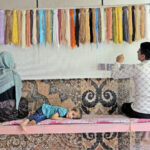
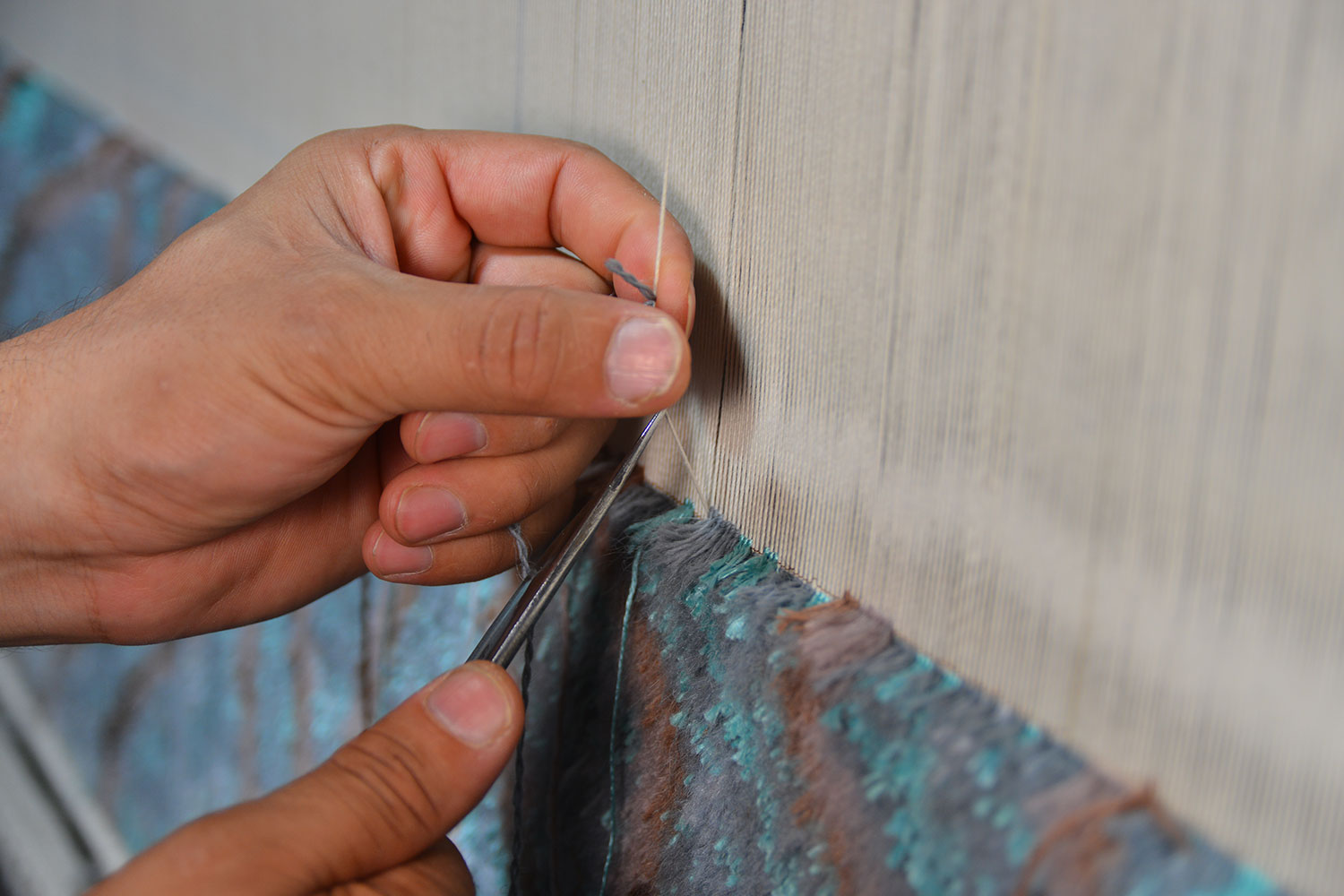
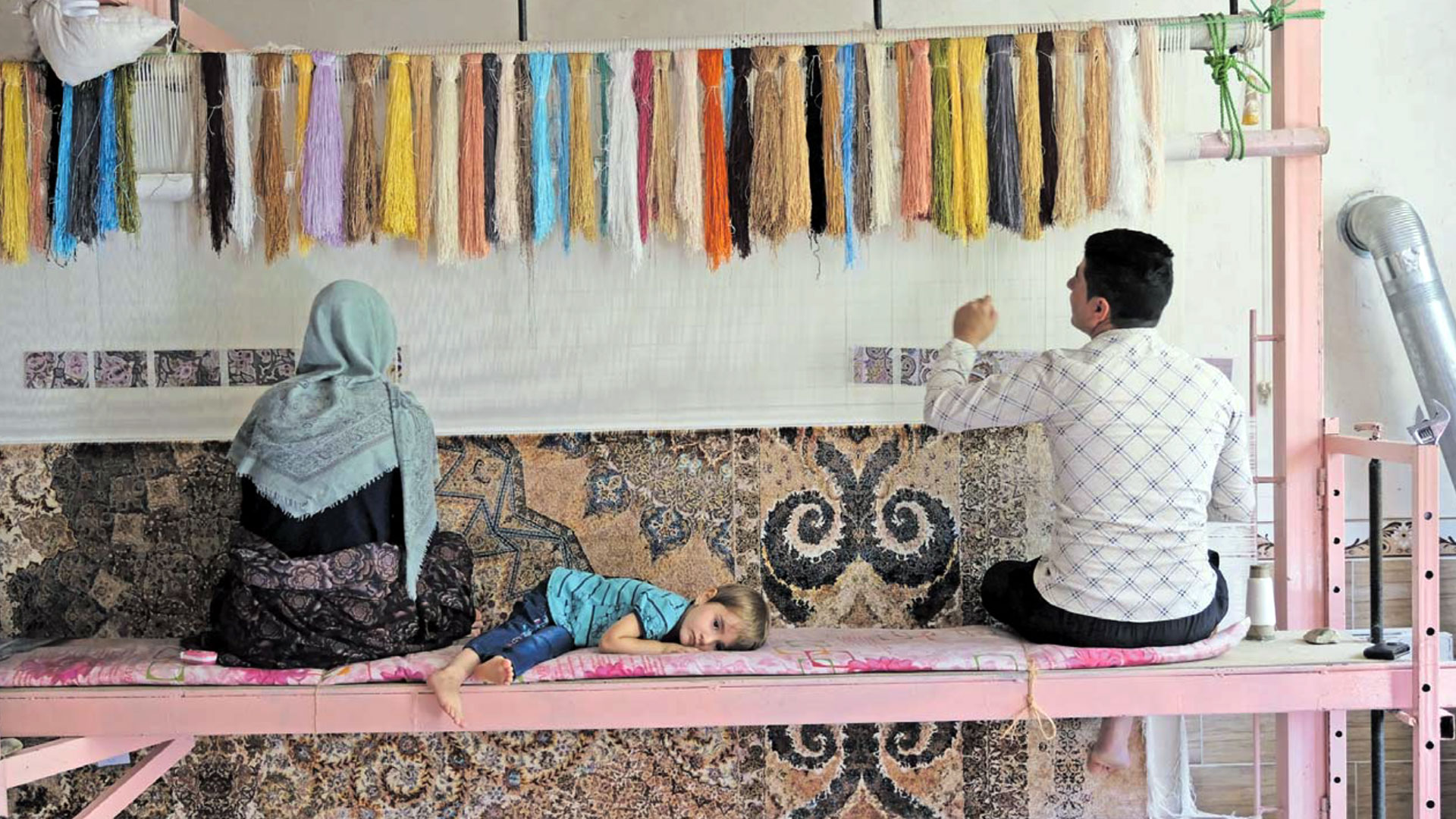
Ashkiyoun scrolls through photos from his niece in Iran. One shows a weaver who worked 15 years on a single carpet. In another, the weaver sits with his young son; by the time the carpet was finished, the boy was twelve. The carpet business is a business of waiting—and one that feeds many families.
Die letzte Verbindung nach Iran