Continuing the tradition
With the end of the US and Canadian embargoes on Iranian rugs, Lucy Upward, editor of HALI’s sister publication Cover, pinpoints the best rugs being made in Iran today that are at the forefront of Iran’s reintroduction to the international market
The 2010 US embargo on the import of Iranian goods including rugs was lifted on Saturday 16 January. At the time many members of the rug community were attending the annual rug trade show Domotex Hanover and when the announcement was made that the accord—limiting Iran’s nuclear programme and thereby lifting international sanctions—had been signed, a whoop of joy rang through the halls of Deutsche Messe.
Now the dust has settled and the outcome is beginning to take effect we take a look at weaving in Iran and the leading Iranian rug producers today. While there have been numerous reports of the damage that has been done to the rug industry in the country, our position as a company that is in regular contact with Iranian producers and the international rug market as a whole has allowed us to view the wider picture
Despite sanctions and financial constraints we have observed that many firms producing rugs in Iran have blossomed over the past six years. The embargo has of course been hard for all producers, with many experiencing a significant loss in market share not only from lack of trade with the US but also from money transfer issues with Europe and beyond. Nevertheless some have taken the opportunity to expand into other areas and markets. Innovation has thrived in small pockets of the country’s overall production, creating a group of carpet diplomats for a country that is rapidly emerging from the imposed restrictions.
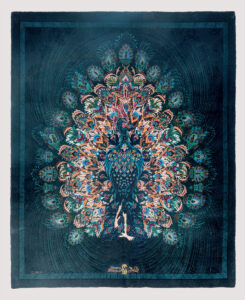
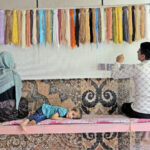
While Iran’s carpet industry must look to these innovators for the way they have realised ideas beyond the embargo parameters and furthered appreciation of Persian rugs in a busy global market, for outside observers this premier group of producers is the perfect way to understand why Iranian rugs remain so important today. Of the eleven rug makers we look at here, each has its own business model and design aesthetic, but the core concept that runs through each company’s dialogue—whether with antique or contemporary designs— is authenticity and tradition.
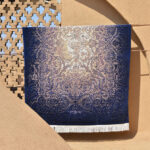
It is widely understood that rug weaving is fundamental to Persian culture and heritage and that the idea of preserving the traditional carpet is important to the country. While markets in the West have seen a significant decline in the sale of antique Persian rugs and reproductions, Iran and the Middle East have been important buying markets for Iranian producers. Traditional design still thrives and in some companies such as Ashkiyoun, based in Tehran, it is highly refined for today’s market. Ashkiyoun produce three collections, the most superior of which is the Jafarnejad line of all-silk carpets, which the firm describes as ‘exceptionally fine traditional designs inspired by the greatest Persianate designs but with a modern Ashkiyoun twist’.
These intricate and innovative designs come out of the tradition for Persian workshop rugs using the finest silk and highest knot densities. The rugs are woven across eleven provinces of Iran, and all end up in Qom for finishing and quality control. Ashkiyoun’s Sahara collection, also in silk but incorporating wool from sheep that graze on the edges of the desert near Sirjan, is similarly traditional, while their ‘Shahdad’ series is more of a nod to modern taste, and will be promoted in the American and European markets over the next year. Both lines also sell well within Iran.
When asked how the embargo had affected the company, Niloofar Ashkiyoun was positive in her attitude to the problem: ‘In one sense the embargo served us well since it allowed us to concentrate on renewing and developing our own production and our modus operandi.’ It is forward thinking that has allowed the company to prosper in a trying climate.
Surveying the production of fine Iranian rugs one can go no further without celebrating a family company who have been an important part of the Persian rug industry since 1820. Miri Iranian Knots have long been one of Iran’s leading rug makers, producing eloquent renditions of traditional Persian workshop or tribal designs in Fars, Malayer and Kurdistan. Winner of the 2016 EUCA award for services to the carpet industry, managing director and chief designer Razi Miri views his creations as works of art that are based on ‘deeply embedded traditions and principles’ and have their ‘own independent characteristics’.